
Start with the cross-draft, not the shield
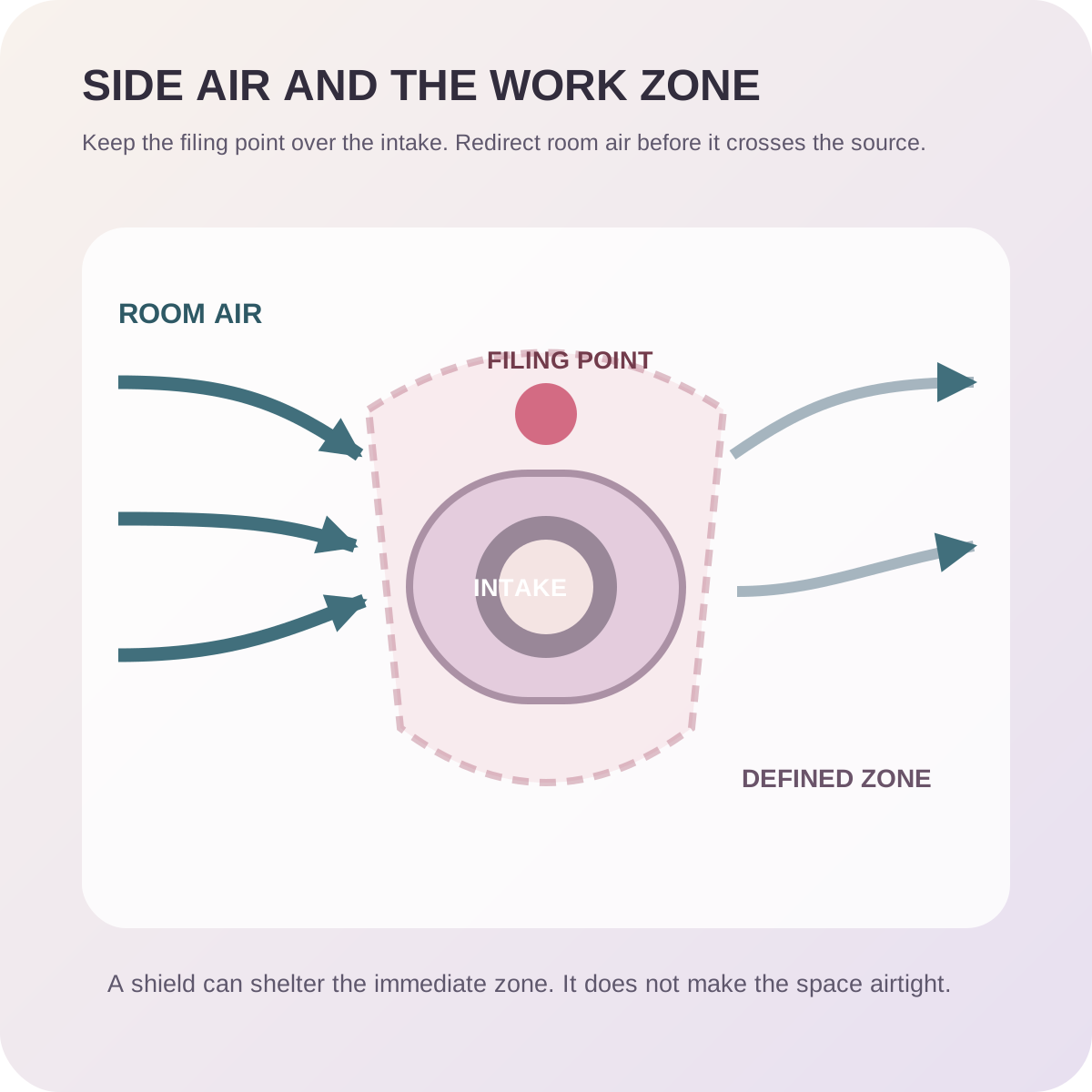
A shield is useful only in relation to the room around it. Before the nail dust collector is switched on, sit where you normally work and notice whether air from a fan, air-conditioning vent, open window, humidifier or a person walking past crosses the filing point. The relevant place is the nail itself, not the far corner of the table.
Move an adjustable fan or vent away from the working zone first. Closing a nearby window for the filing stage may also remove the obvious sideways flow, provided normal room ventilation remains in place. The aim is not to seal the room. It is to stop avoidable room air from carrying fresh filing dust away from the intake before the collector has a chance to draw it down.
Then repeat the check with the shield fitted. If it shelters the immediate zone and the active nail can still sit over the centre of the intake, the shield has a practical role. If air still sweeps across the nail, correct the room or table position instead of treating the clear panel as a guarantee.
If you are still comparing intake position, filter access, sound and table fit, begin with the broader nail dust collector buying guide
What the shield changes, and what it does not
A flat tabletop collector leaves the area above the intake open from every side. That can be convenient for tools and hand movement, but it also leaves the filing point exposed to sideways room air. A removable shield adds a physical boundary around part of that immediate working zone. This is a difference in layout and access, not evidence that one design captures a stated percentage more dust than another.
The shield is not airtight. Hands enter through openings, the front remains accessible and room air still moves around the workstation. Visible particles can remain on the hand, tools or table after a pass. Stop and correct the position if dust consistently travels sideways instead of continuing on the assumption that the shield will compensate for a poor setup.
Government workplace guidance treats source control as part of a wider system that can include ventilation, housekeeping and personal protective equipment. A desktop nail dust collector can support work close to the source. It is not a medical device and does not replace local exhaust ventilation designed for a workplace where that is required.
- Useful boundary: a more defined immediate filing zone
- Not established: an airtight enclosure or complete capture
- Still required: sensible room ventilation and workstation cleaning
- Workplace boundary: follow the controls required for the actual salon or task
Map the hand path before filing
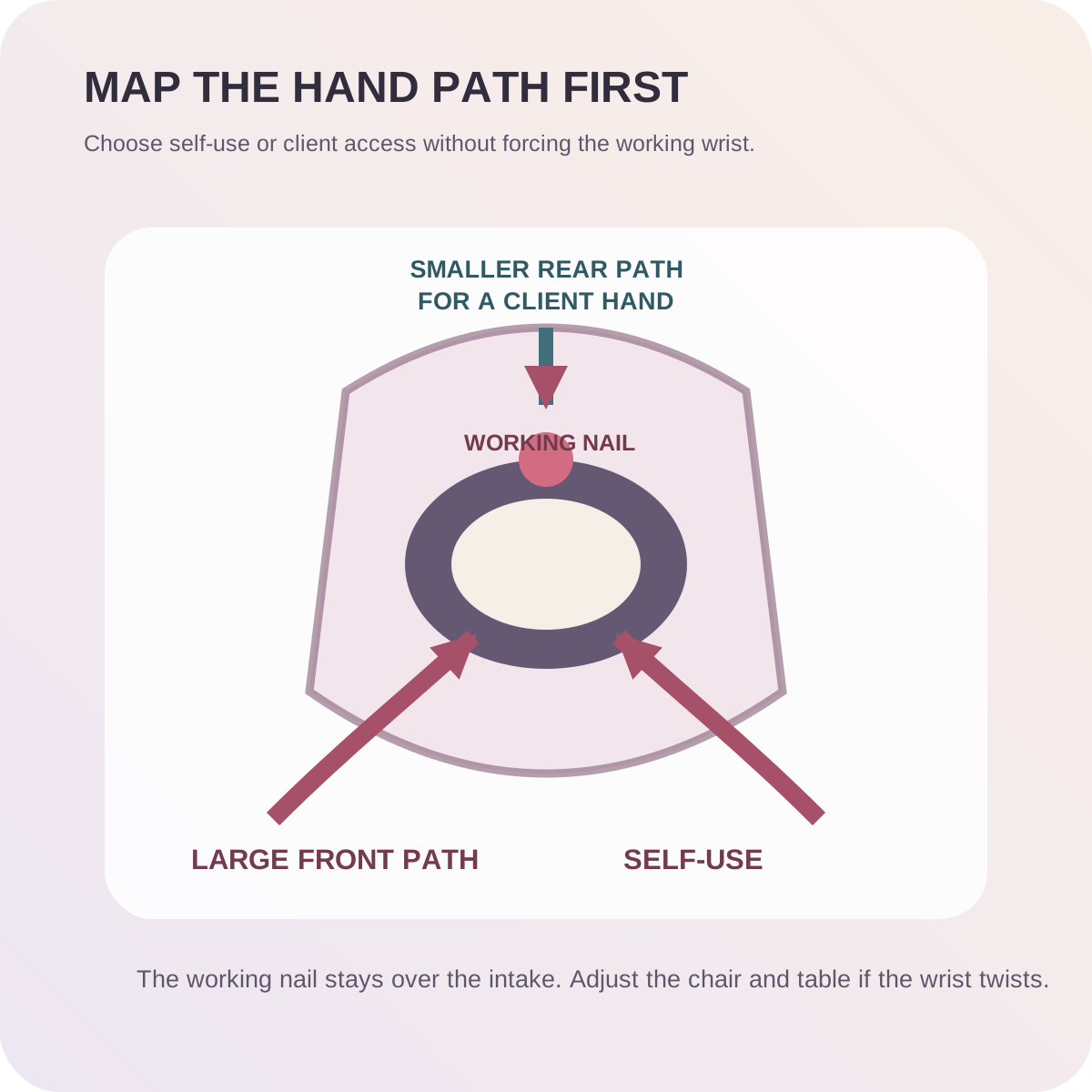
The best shield position is the one that lets the working nail stay over the intake without twisting either wrist. Set the collector on the table, place the lamp and hand rest where they will actually be used, then rehearse the movement with the power off. A product can fit the table by measurement and still create an awkward reach once the tools are in place.
For self-use with the POWCUBE shield installed, both working hands approach through the larger front opening. The hand being filed rests over the intake while the other hand holds the file or e-file. Move the chair or collector rather than reaching deep into the zone with raised shoulders or a sharply bent wrist.
For a client manicure, the client hand approaches through the smaller rear opening and the technician works from the larger front side. The two paths meet above the intake. If the client has to twist, if the technician loses a clear view, or if the lamp blocks the opening, stop and adjust the workstation before filing starts.
When an open tabletop is the better choice
Removing the shield is not a downgrade. It is the correct setup when side access matters more and the room does not send a noticeable cross-draft through the filing point. Detailed sidewall work, a different hand rest, a larger lamp or a particular client position may be easier without a boundary around the intake.
Run the same power-off rehearsal in the open setup. Keep the working nail above the intake, make sure tools do not cover the inlet and leave the outlet clear. An open table is not an excuse to file beside the collector. Once the source moves away from the intake, the product layout cannot correct the distance for you.
Room conditions can change during the day. A window may be opened, an air-conditioning cycle may start, or another person may place a fan nearby. The shield decision is therefore a session decision, not a permanent label for the room. Recheck when the airflow or hand path changes.
Use a two-question setup decision
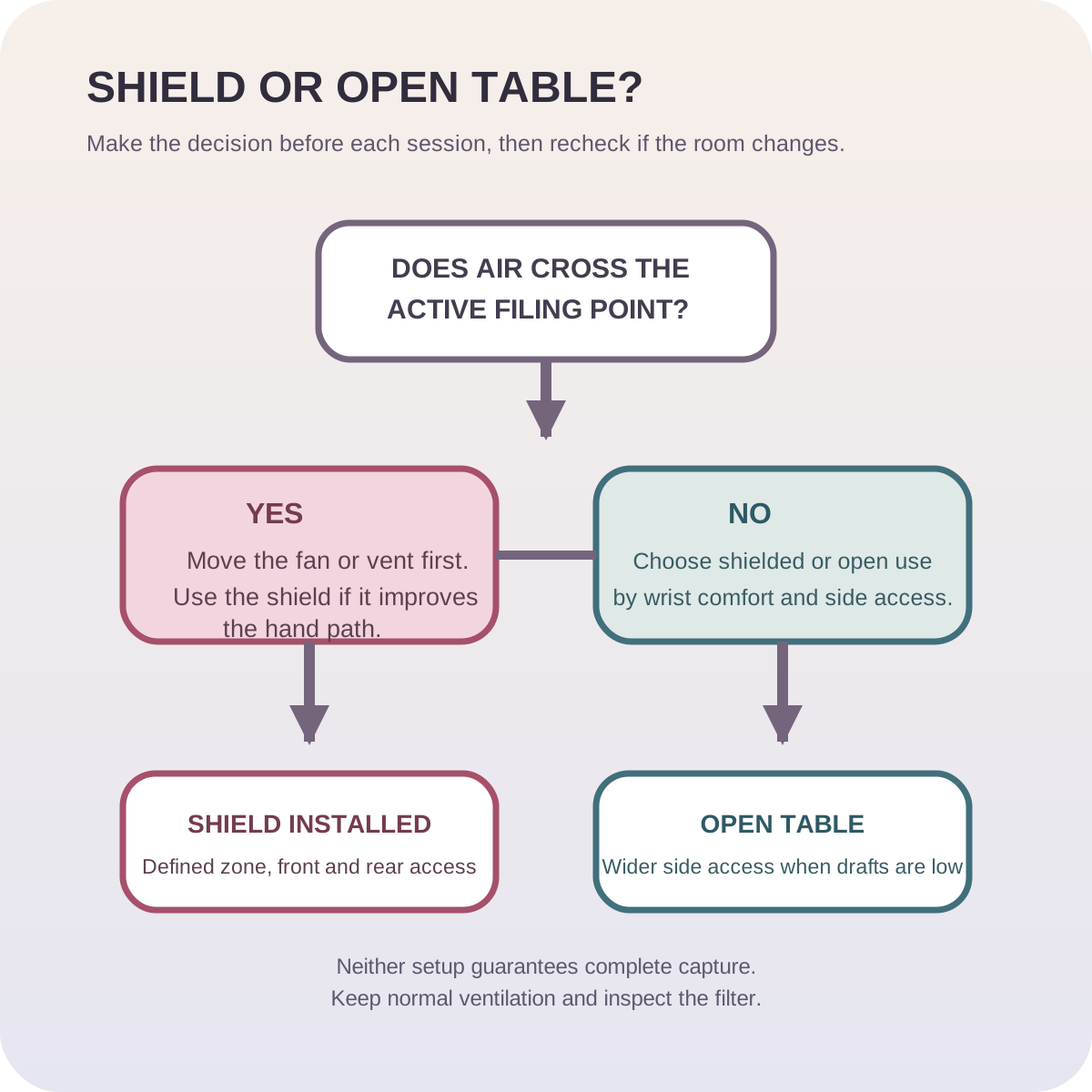
Before each session, ask two questions in order. First, does room air cross the active filing point? Second, can the required hands reach the intake comfortably with the shield installed? If there is a cross-draft and the shield improves the hand path, fit it. If the room is calm and the shield restricts side access, use the open table.
If the answers conflict, correct the room before choosing the accessory. For example, a fan that blows directly through the filing zone should be moved rather than accepted as fixed. If the shield then forces the wrist into a poor angle, adjust the chair, lamp, hand rest or collector position. Do not select a setup merely because it looks more enclosed.
After the choice is made, switch the collector on at an appropriate operating level and make a short, controlled filing pass. Watch the direction of visible debris without treating it as a laboratory test. If the path is consistently sideways, stop, switch off when repositioning equipment and correct the setup before continuing.
Check the filter before and between sessions
The shield decision does not remove the filter check. Before filing, make sure the filter is present, lies flat and is not visibly damaged or overloaded. Confirm that the intake and outlet are clear. A clean-looking shield with a poorly seated filter is not a ready workstation.
After every manicure, switch the unit off before handling the filter. Inspect it and use dry care unless the model instructions explicitly allow another method. Do not wash, soak or describe the POWCUBE replacement filter as HEPA-rated because of its appearance. Replace a filter that is damaged, warped, no longer lies flat, or does not allow normal airflow to return after careful dry cleaning.
For several appointments or repeated home sessions, recheck between sessions. The useful frequency comes from the actual condition, not a made-up monthly interval. Clear the table, check the shield and openings, inspect the filter and look again for a new cross-draft. This short reset is more reliable than assuming the first setup remains correct all day.
The current inspection and dry-care boundaries are listed in POWCUBE Support
For a confirmed spare that matches this collector, see the POWCUBE two-pack replacement filter
Where the POWCUBE design is different
The verified POWCUBE difference is the removable clear shield with two access paths. The larger front opening supports self-use and the technician side of client work. The smaller rear opening accepts a client hand. Removing the shield converts the same base to an open tabletop when wider side access is the better fit.
The collector is offered in White and Pink. Its published specifications include a 5000 RPM motor figure, a 30 to 35 dB sound figure and a rotary operating-level control. These describe the product, but they do not establish a dust-capture rate. RPM alone cannot compare two collectors without airflow, pressure, filter condition, intake geometry and a disclosed test method.
This design is relevant if your recurring problem is sideways room air or the need to switch between self-use, client access and an open table. It may be unsuitable if the table cannot support the hand path, if a workplace requires engineered extraction, or if you need a specification that POWCUBE has not documented. Check the actual requirement before buying.
Review the current colour options, hand-access views, published specifications, price and availability on the POWCUBE Nail Dust Collector product page
A practical decision for buyers in the Canada
Choose the shielded setup when a real cross-draft reaches the filing point and the front or rear access keeps the wrist comfortable. Choose the open setup when room air is calm and side access improves the task. If neither arrangement keeps the nail over the intake naturally, change the workstation or choose a different solution instead of forcing the product to fit.
Before ordering, confirm the current product details, filter availability, delivery, returns and warranty for your market. Before each use, repeat the room-air, hand-path and filter checks. That leaves you with a simple operating rule: the shield is a removable workspace option, not a promise that one pass will collect everything.
- Cross-draft at the nail: move the source of room air, then test the shielded setup
- Comfortable front or rear path: keep the active nail over the intake
- Low room airflow and restricted side access: remove the shield
- Visible sideways debris: stop and correct the position
- Repeated sessions: inspect the filter and workstation between uses